“Creativity is magic. Don’t examine it too closely.”
Edward Albee
For all the hype surrounding ‘generative’ AI, it remains apparent that AI, in its current form, is profoundly uncreative. It functions like a very sophisticated blender; it is able to mix up only what we put inside it. This is why there is such intense focus on training data and the definition of analytical rules; but the more we ‘feed’ the system, the more complex the blend becomes, while always remaining within defined boundaries. But creativity is about making something new and stepping outside existing frames. Using our blender metaphor, creativity is not pressing the ‘on’ button; it is in the choice made in selecting ingredients, it is in the aesthetic ingenuity of the designer, and the person who thought, ‘there has got to be a better way of enjoying fruit’. The machine is simply a physical expression of human creativity, a device that can do processes and probabilities much faster than a person, but is not, itself, a creative force.
Edward Albee’s statement provides important insights into the nature of creativity and AI. Firstly, his emphasis on not examining “too closely” shows a concern over the fragility of creativity, stemming from its uncontrollability and spontaneity. As Peter von Matt argues, creativity “emerges outside of all areas over which the ego might exercise control,” and when an idea occurs, it “crashes like a meteorite into my consciousness.” The risk is that AI’s dependence on pattern recognition and deep learning will undermine these dynamics. Secondly, his idea of “magic” is important as it highlights how creativity is unknowable. As a result, AI can never replicate human creativity as any attempt to convert this ephemerality into something fixed, like code, will undermine its essence. Not because of inadequate technologies or the limits of an individual’s intellect, but because converting something infinite into something specific and finite destroys the infinite. Jean Baudrillard describes this loss of depth when he states AI is “devoid of artifice”. It has no desire and no meaning and thus can only be a warped mirror, a poor mimic of the human that sits before its screen.
Appreciating AI’s limits forces us to recognise that creativity is probably the most valuable and unique feature of the human mind. Understanding this truth is necessary to support the ongoing transition from the Industrial and Knowledge Economy towards a future ‘Creative Economy’, which harnesses the unique and magical parts of man’s productive potential. More importantly, focusing on creativity will help prevent the emergence of Baudrillard’s “Virtual Man [who] makes love via the screen and gives lessons by means of the teleconference. He is a physical – and no doubt also a mental cripple”.
This will require approaches to generate creativity which are unbounded, which work alongside its ‘magic’, and take power from its uncertainty, uncontrollability and spontaneity. Given these characteristics, creativity cannot be stimulated directly; it can only be grown by developing the preconditions for creative breakthroughs. Giorgio Vasari captured this idea of preconditions when he used the phrase “some quality in the air of certain places” to describe the arrival of Renaissance art. Warren Bennis talks about the “atmosphere most conducive to creativity” when examining the imagination of Disney and the inventiveness of the Manhattan Project. Secondly, creativity flourishes via nurturing, not management. As Tom Peters stated, “management is about arranging and telling”, whereas nurturing is, in the words of General Stanley McChrystal, concerned with building “viable ecosystems in which the organisation operates”, where the leader is “willing to learn and to trust”, which “awakens and encourages …a sense of possibility and responsibility” and can “stir an intangible but very real desire inside people.” It results in “group success [which] spurs cooperation … trust and purpose”. McChrystal revolutionised modern military leadership through this ‘gardener’ model that deliberately mixes order and uncertainty, recognising that the gardener may trim the hedges and encourage flowers to grow, but cannot will them to stand in line. This approach is equally valuable in helping to cultivate creativity.
Based on these ideas of preconditions and ‘nurturing’ creativity, the article outlines five approaches, each showing different ways to generate creativity and shape and manage the associated instability and uncertainty. None of these methods is perfectly replicable; no creative system is exactly the same as another, but they provide a framework for generating and stimulating creativity. The five approaches and themes are:
- Tour de France – Preparation and facilitating adaptability
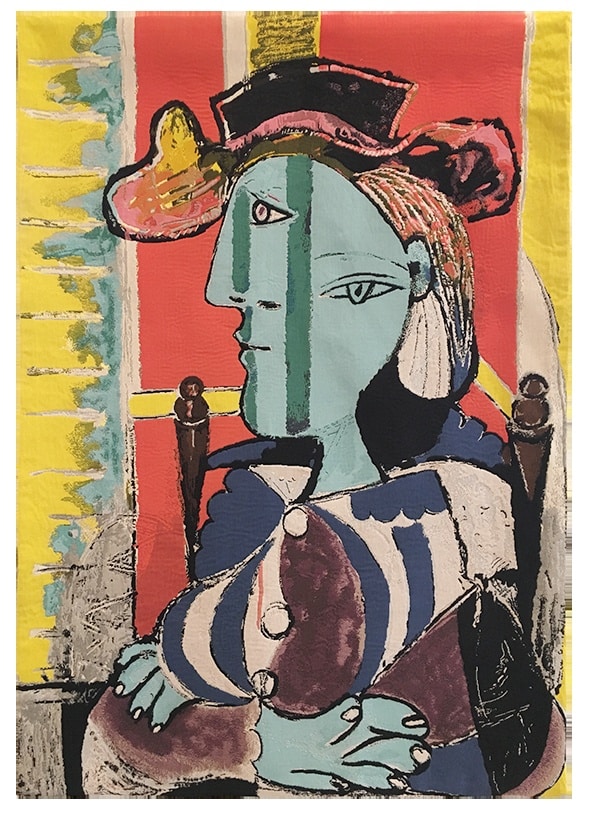
- Picasso – Freedom and expansion
- Szilárd – Iteration via interaction
- Gropius – Tension and constraints
- Kuhn – Reframing the system
In many sports, including cycling and F1, once a race has started, there are limited opportunities to intervene. As a result, the focus in these sports is on preparation, organising all the resources to win, and then practising to be more prepared and more able to adapt to unpredictable events. In the Tour de France, this involves everything from bike design to training schedules to the rider’s food intake and sleep patterns. In F1, it involves multiple simulations and the development of pre-prepared game plans. Creativity can be generated using a similar model, by building a dynamic system, with clear goals, with calibre individuals with different skills, sitting within collaborative networks with freedom to explore, supported by an environment of trust, with tools and methodologies and access to knowledge and resources. The system is then nurtured to encourage participants to continually develop new ideas and hypotheses, conduct experiments and generate interaction between ideas and the real world. This approach underpins many impactful research institutes, as is evident in Venkatesh Narayanamurti’s detailed case studies of Bell Labs, the Engineering school at UC Santa Barbara and the Broad in Boston.
The ‘Picasso’ model adopts a different approach, emphasising a free and unbounded attitude to encourage creativity, based on Pablo Picasso’s argument that “the chief enemy of creativity is ‘good’ sense”. This perspective is about changing conditions rather than accumulating resources. It retains a sense of intent but focuses on open-ended goals and timescales across the entire creative process, and accepts uncertainty and unpredictability, rather than demanding specific targets. The approach prioritises creating freedom to explore, exemplified in software development by Hackathons and by diminishing structural and organisational barriers, as is evident in the Francis Crick Institute’s strategy to “discovery without boundaries”. This freedom paradoxically can result in feelings of fulfilment and unhappiness and fear of failure, particularly when results are not forthcoming. While pushing the boundaries of Impressionist art, Claude Monet wrote, “I am very depressed and deeply disgusted with painting. It is really a continual torture”. The pioneering Nobel prize winner, Peter Medawar, described the “miserable sense of oppression” experienced when an experiment fails to support a hypothesis. As a result to build a creative environment based on freedom, it is important to develop, in parallel, trust and psychological safety.
The third approach offers a way to manage the challenges resulting from the interaction between freedom and pressure for results. It involves increasing the number of interactions between people, with diverse backgrounds, knowledge and data to generate ideas, to build confidence and develop new questions and further ideas. As Kyna Leski suggested, creativity results from “the exchange that happens between the world, creator, and those with whom the creation interacts.” This ‘Szilárd’ approach focuses on generating a chain reaction, increasing interactions to raise the probability of a creative event. It involves compressing space to create more interactions: in buildings, in shared research centres, in organisational units, in artistic and in scientific clusters, both unconsciously or consciously, as in Paris in the early 20th century or Boston in the early 21st century. It involves creating a rewarding high-intensity environment, based on the principle, as Charles Handy states, that “we are all hungry spirits craving purpose and meaning at work, to contribute to something beyond ourselves.” Adding energy, though stimulating competition and cooperation between individuals and institutions, further increases the probability of creative events. As Bennis’ analysis of high performing teams highlights, combinations of compression, intensity, energy, competition and collaboration create interactions and the ideas to accelerate creativity.
The fourth, ‘Gropius’ approach, emphasises the importance of tension and constraints in generating preconditions for creativity. Ian Leslie stated the Beatles’ creativity flowed from the “beautiful tension” between Lennon and McCartney, a chance relationship he characterised as like an “unstable molecule”. At the Bauhaus, Walter Gropius deliberately brought together artists with different perspectives to generate creative tension, a process which transformed modern design. Constraints or lack of resources can also drive creativity. Limited financial funds in post-war Japan led to the development of ‘Just in Time’ manufacturing, and the lack of weapons was a factor behind Gandhi’s radical idea of using non-violence to gain Indian independence. These constraints were a product of circumstances, but they can also be engineered. Flagship Pioneering uses “ProtoCo”, a constrained resource model, to develop radical ideas in the biosciences. The challenge with this tension and constraint approach is sustainability. Maintaining the tension to generate creativity is difficult over time, and successful ‘constrained creativity’ can lead to a surplus of resources, which in turn can undermine its engine of success.
New thinking can occur within the ‘rules of the game’, but changing the rules themselves can have an even more fundamental effect on creativity. The ‘Kuhn’ approach involves reframing all aspects of the creative process. Geoff Emerick and Ian Leslie’s analysis of the Beatles highlighted the extent to which John Lennon and Paul McCartney changed the foundations of popular music. Based on an intent to be ‘different,’ they reframed pop lyrics introducing two lead singers in conversation (“it has been a hard days night…but when I get home to you”), they replaced the musical convention of a single melody in a song with two melodies of equal status, and they invented new methods of recording, and using the studio as a laboratory, they absorbed multiple music styles (Rock and Roll, Bach and Indian) into their work and created new totally sounds. To find these new paradigms is complicated, but Thomas Kuhn’s work and system 1/system 2 thinking suggest they can be found by looking for anomalies, setting up new perspectives/frames and consciously considering ‘incommensurable ideas’ (which are fundamentally different).
These five approaches offer different ways of generating creativity; they can be used individually or combined to help stimulate new thinking. Underpinning these distinct approaches, there are also universal capabilities which can help stimulate creativity: firstly, customised processes which develop creative approaches which fit a specific context, secondly, a mindset and ability to combine and maintain both the unstable and stable aspects of the creative process and thirdly, a common set of skills and values. The range of human creativity, the many different approaches to generating creativity and the inability of individuals and organisations to be continuously creative (with the possible exceptions of Picasso and Pixar) suggest that creativity cannot be achieved by copying best practice or through prescriptive playbooks. Instead, stimulating creativity requires a customisation process to integrate and sequence a complex set of inputs in response to specific objectives and the environmental conditions. Analysing creative science clusters, Vivek Wadhwa found that copying and transferring the standardised ‘Silicon Valley model’ in the US, to New Jersey and Texas, and overseas was unsuccessful, primarily because of the importance of different local cultural and legal factors. Instead, successful cluster models are the result of combining a set of context-specific inputs and interactions. Two successful examples of cluster development in Minnesota and Pittsburgh involved combining the ‘Tour de France,’ the ‘Szilárd’ approaches and parts of the ‘Picasso’ approach in slightly different ways. Monica Smith identified that the growth of the Minnesota Medical Alley, (the centre of the cardiovascular medical device industry) was the result of the close connections between the University of Minnesota and the Variety Heart Club Hospital, (with their medicine and engineering capabilities), together with the personal relationships of a group of surgeons and engineers, with a strong experimental led approach to innovation, and the inspirational leadership of Dr. Wangensteen, (Chief of Surgery). Anna Karvellas analysis of Jazz innovation in Pittsburgh also highlights a combination of context-specific inputs and events. The distinctive Pittsburgh jazz came from a city that supported music education in every school, the flow of people who converged at the river and railroad junctions in Pittsburgh and events like the Musicians Club jam, where “musicians took the stage and faced competitive heat, driving the sound to new levels of skill and complexity; in performances that were part audition”.
Secondly, it is critical to recognise that creativity is inherently an oscillation between instability and stability. Each of the five approaches involves different mechanisms driving instability: the dynamic system in the ‘Tour de France’, the freedoms in the ‘Picasso’ approach, Szilárd’s ‘chain reactions’, the frictions inherent in the Gropius approach and the paradigm shifts in the ‘Kuhn’ model. Building preconditions to generate creativity requires the acceptance and, at times, the encouragement of instability and, at the appropriate time, the ability to coalesce activities to return to stability and to deliver creative work. These stabilisation processes are where the ‘storm of creation’ is moderated, organised and translated. Walter Gropius designed the Bauhaus around a system of tension, collaboration and delivery. He established a single foundation programme to build a common design language and encouraged intense socialising among lecturers and students to stimulate collaboration. He organised exhibitions and joint tasks, including building a demonstration house, to encourage the completion of the creative processes and deliver new designs and products. The process of writing research papers is a stabilisation process, the translation of creative ideas, often unstable and imprecise, into an organised and stable form. As François Jacob noted, the process of writing a paper “also transforms the very nature of research; formalises it. Writing substitutes a well-ordered train of concepts and experiments for a jumble of untidy efforts, of attempts born out of passion to understand.” This duality in the creative process, of instability and stability, shapes the characteristics of the leaders of creative groups. As Bennis identified, they are “almost always a pragmatic dreamer. They are people who get things done, but they are people with immortal longings.” They are also dynamic, “people who cannot invent and reinvent themselves must be content with borrowed postures, secondhand ideas, fitting in instead of standing out.” Research has identified a third common theme of creativity, the importance of a combination of thinking skills and behavioural traits that underpin creative individuals and organisations, including: belief in a mission, curiosity, willingness to learn and unlearn, the value of experimentation, connections to extensive networks, determination, resilience and the ability to ‘wonder.’
The analysis of the different approaches to stimulating creativity and the common themes leads to five recommendations: Creative individuals and organisations benefit from investing in understanding systematically how their own creative processes work. Secondly, develop a customisation process to build the preconditions for creativity, based on defined aims and capabilities. As a result, individuals and organisations should maintain a portfolio of different capabilities and approaches to increase the probability of generating creativity. in line with their aims. It is important to build a culture able to embrace high degrees of instability, oscillation and unpredictability. Finally, building the capabilities which underline creativity requires equal emphasis on thinking skills and behaviours, on brilliance and persistence.
While it is risky to set limits on the capabilities of AI, this article argues that AI is fundamentally incapable of being creative. AI models are inherently inwardly focused on layers of captured training data. They are bound by rules; their engines are based on pattern recognition, predictability, and deep-loop learning. This contrasts with our experience of creativity, the uncontrollability, the spontaneity and the ‘magic.’ AI, in the process of coding, assumes that creativity can be defined and is knowable. Yet creativity is an infinite process, unbounded and inherently uncertain. As a result, for the foreseeable future, humans will have the unique opportunity and responsibility to be creative. The extent to which they seize this chance will determine the next phase of our economic development and shape how humans conceive of themselves as self-determining, ambitious and free entities. This relies on understanding that the oscillation between instability and stability is what lies at the heart of creativity. It is magical and needs to be recognised, cherished and nurtured.
Further Reading:
- Warren Bennis, Organizing Genius: The Secrets of Creative Collaboration (1997).
- Kyna Leski, The Storm of Creativity (2015).
- Ian Leslie, John & Paul: A Love Story in Songs (2025).
- Venkatesh Narayanamurti, Odumosu, Toluwalogo, Cycles of Invention and Discovery: Rethinking the Endless Frontier (2016).
- Albert Read, The Imagination Muscle (2023).
- Amy Wallace and Edwin Catmull, Creativity, Inc.: Overcoming the Unseen Forces That Stand in the Way of True Inspiration (2014).
- National Museum of American History, Places of Invention (2015).
With thanks to Marcus Schindler: Global R&D Leader, Advisor & Mentor | Former CSO & EVP, Novo Nordisk.
 The Archive of Free Thinking
Leave a comment